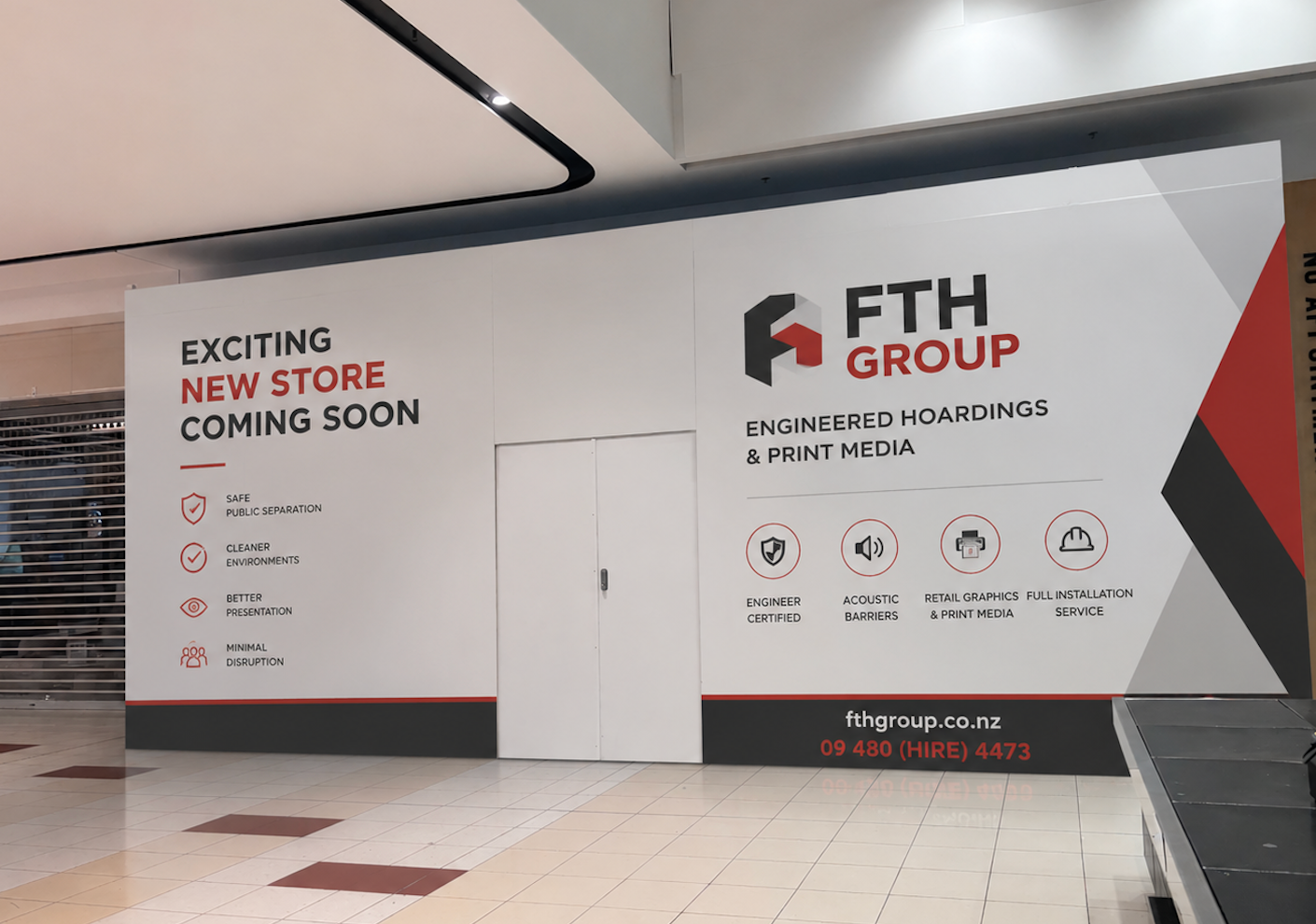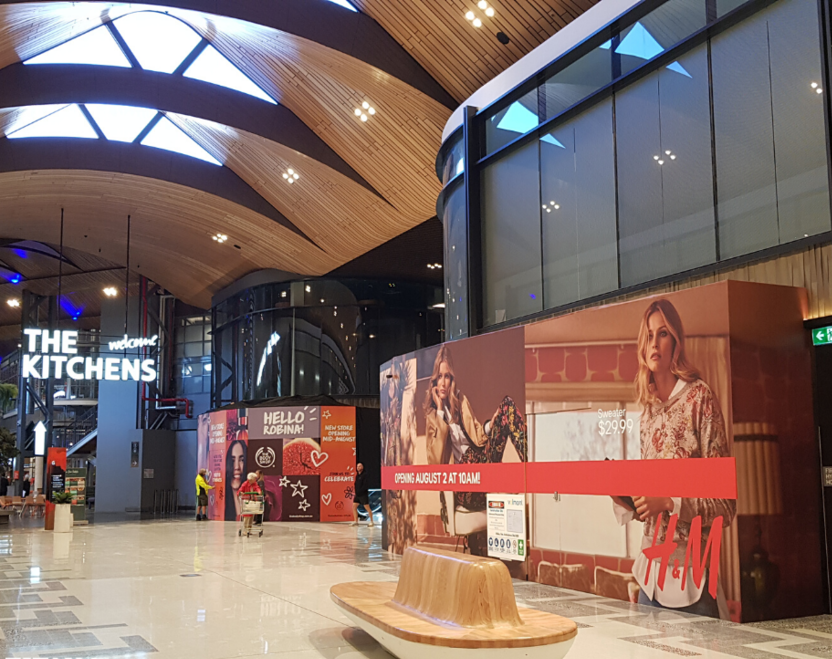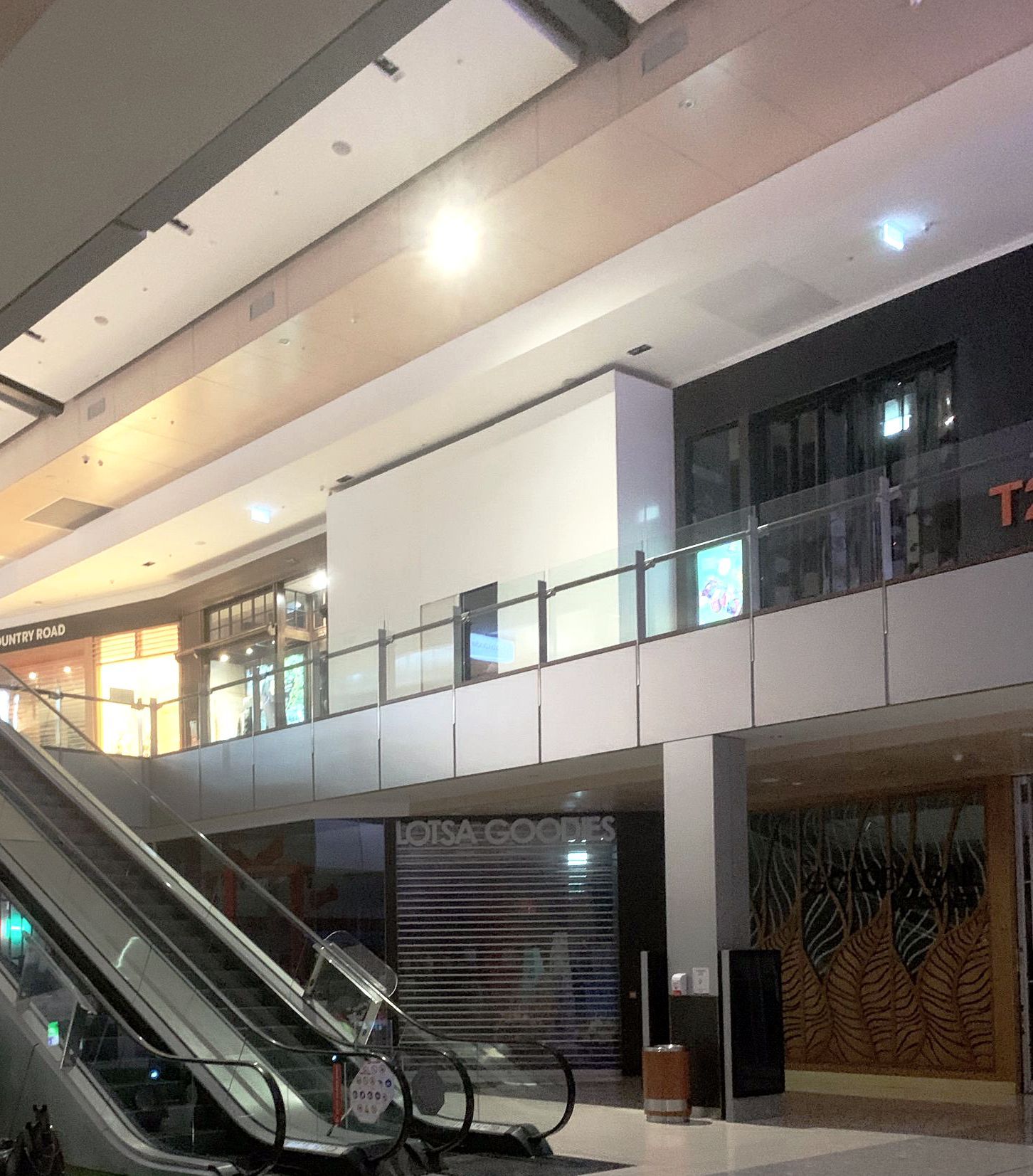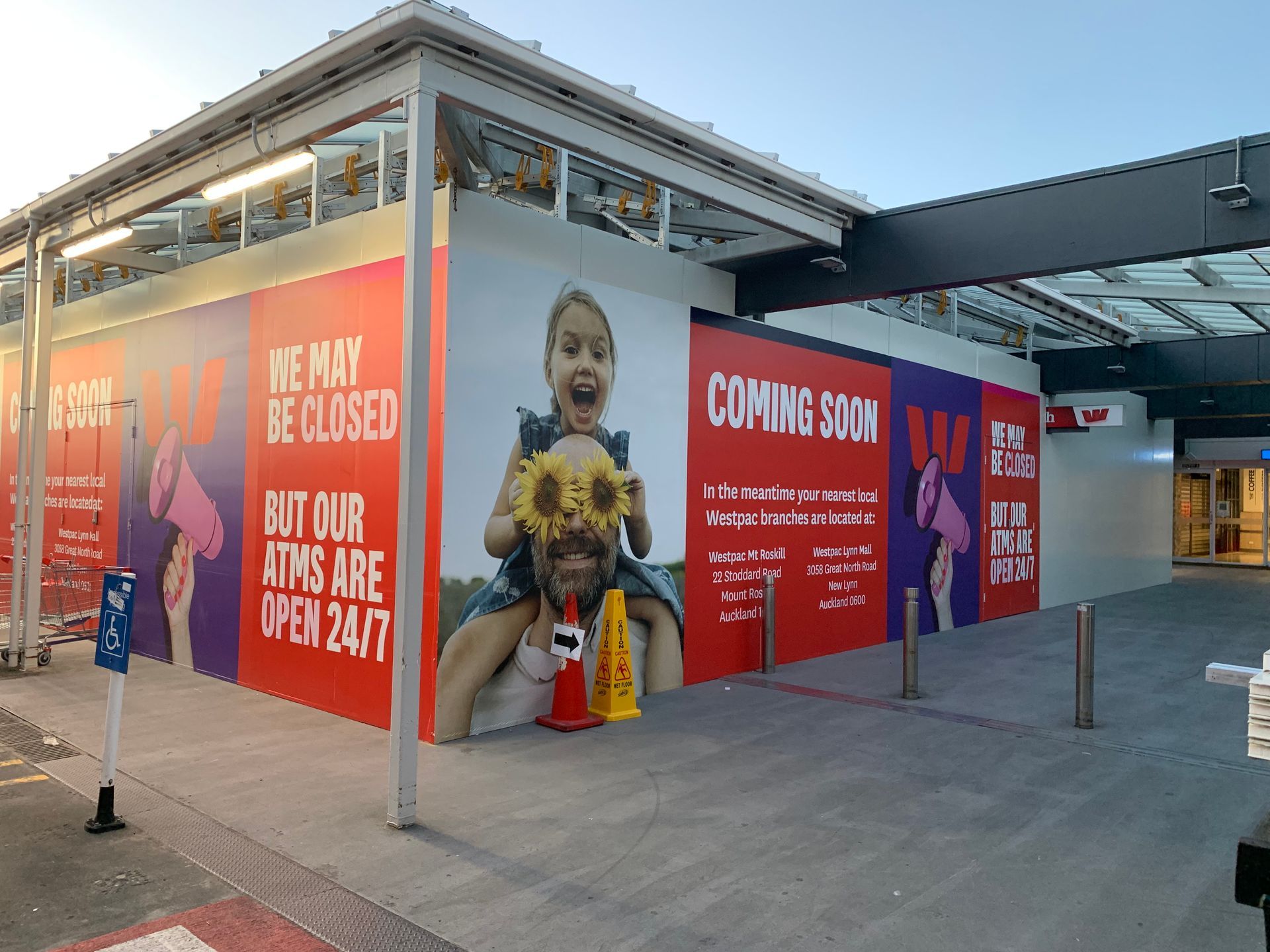

Internal Shop Hoardings
Internal Mall Hoardings NZ | Structural, Wind & Safety Compliance Guide

Internal Mall Hoardings in New Zealand – Questions & Answers
Are internal hoardings in malls exempt from structural, wind, or impact requirements?
No.
Internal hoardings in malls are not exempt from structural, wind, or impact requirements. In many cases, they are subject to higher engineering and safety standards due to crowd loading, pressure differentials, and asset owner requirements.
Being installed indoors or described as “temporary” does not remove the obligation to comply with New Zealand building and safety standards.
Are internal hoardings regulated under New Zealand law?
Yes.
Under the Building Act 2004 and the New Zealand Building Code, internal hoardings are considered building structures, even when installed temporarily.
There is no legal exemption simply because a hoarding is:
Inside a shopping centre
Temporary in nature
Installed for fit-out or demolition works
All hoardings must comply with relevant Building Code clauses, particularly those relating to structural stability and public safety.
Why are internal mall hoardings often considered higher risk than external hoardings?
Internal mall hoardings are typically installed in high-occupancy, fully operational public environments.
They are commonly located:
Along active pedestrian malls
Near major retailers and food courts
Adjacent to kiosks and common areas
At mall entrances and through-connections
These conditions significantly increase:
Pedestrian and trolley impact risk
Crowd loading during peak trading
Consequences of structural failure
As a result, internal hoardings are often treated as high-risk temporary structures, sometimes requiring more stringent controls than external site hoardings.
Do internal hoardings need to be designed for wind loading?
Yes — in many cases they do.
A common misconception is that wind loading only applies to outdoor structures. In reality, internal hoardings can be affected by wind and pressure effects, including:
Direct exposure at mall entrances
Through-connections to carparks or loading docks
Demolition works that open the building envelope
Smoke exhaust plenums
HVAC and pressure-controlled environments
Because of this, AS/NZS 1170.2 (Structural Design Actions – Wind) is frequently applied to internal mall hoardings, with wind pressures determined by a structural engineer or a wind study.
What impact and crowd loading requirements apply to internal hoardings?
Internal hoardings are continuously exposed to:
Pedestrian contact
Shopping trolley impact
Accidental collisions
Crowd pressures during peak trading
Emergency evacuation loads
To manage these risks, internal hoardings are commonly required to comply with:
AS 4687 / AS 4687.3 – impact resistance, overturning, and anti-climb performance
AS/NZS 1170.1 – imposed and crowd loading
NZ Building Code Clause F4 – safety from falling and impact
In many mall environments, these requirements exceed those applied to standard external hoardings.
Is building consent always required for internal hoardings?
Not always — but lack of building consent does not mean lack of compliance.
Even where a building consent is not required, internal hoardings must still:
Comply with the Building Code
Meet Health & Safety obligations
Satisfy asset owner requirements
Shopping centre owners often impose mandatory standards that go beyond council requirements.
What additional requirements should shopping centre owners impose?
Mall owners and operators need to ask for:
Engineer-certified hoarding systems
Defined wind and impact load ratings
Compliance with centre-specific fire and egress plans
Formal approval of documentation before installation
Ongoing inspection and maintenance regimes
Failure to meet these requirements can result in:
Installation delays
Forced removal of hoardings
Programme overruns
Increased liability exposure
These requirements are contractual and enforceable, regardless of council consent status.
Why is engineer certification critical for internal hoardings?
Internal mall hoardings are often:
Custom in height and width
Installed on uneven slabs or ramps
Exposed to wind, pressure, and crowd loads
Located in high-consequence public areas
Generic or non-engineered hoarding systems are not suitable for these conditions.
An engineer-certified hoarding system provides:
Verified structural capacity
Defined installation limits
Compliance with NZ Building Code requirements
Confidence for asset owners, councils, and insurers
Reduced approval and compliance risk
What standards are typically used to engineer internal hoardings?
Internal hoardings are commonly engineered to:
AS/NZS 1170.2 – wind actions
AS/NZS 1170.1 – imposed and crowd loads
AS 4687 / AS 4687.3 – impact, overturning, and anti-climb performance
NZ Building Code B1 – structure
NZ Building Code F4 – safety from impact and falling
These standards are widely accepted by councils, engineers, and major retail asset owners in New Zealand.
How does FTH Group approach internal mall hoardings?
FTH Group designs and supplies engineered hoarding systems specifically for internal mall environments in New Zealand.
Our hoardings are:
Engineered for wind, impact, and crowd loading
Certified by structural engineers
Compliant with NZ Building Code clauses B1 and F4
Aligned with AS/NZS 1170 and AS 4687 standards
Accepted by major retail asset owners
Suitable for custom heights, widths, and layouts
This ensures internal hoardings are not only visually compliant, but structurally safe and fit for purpose.
What is the key takeaway for tenants and property owners?
Internal mall hoardings are not a simplified compliance scenario.
In many cases, they are subject to higher engineering and safety requirements than external hoardings. Treating them as low-risk temporary barriers exposes tenants and property owners to unnecessary safety, compliance, and programme risk.
Proper engineering, certification, and design are essential to protecting the public and delivering compliant outcomes.