
Internal Shop Hoardings
Temporary Hoarding NZ: Compliance
Temporary Hoarding NZ: Compliance
Temporary Hoarding NZ: A Practical Decision Tree For Compliance, Engineering & Safety
Most people do not think too much about temporary hoarding — until something goes wrong.
A project gets delayed. Someone asks for engineering. Questions come up around safety, wind loading, or public risk. Suddenly, what seemed like a simple temporary structure becomes a much bigger conversation.
In New Zealand, temporary hoardings can play an important role in managing public safety, securing work areas, maintaining presentation standards, and protecting live environments such as shopping centres, retail sites, and commercial buildings.
However, not every hoarding project is the same.
Depending on factors such as height, location, wind exposure, public access, fixing methods, and site conditions, different considerations may become relevant.
This practical guide explains the key questions worth asking before installing a temporary hoarding in New Zealand.
What Is A Temporary Hoarding?
A temporary hoarding is generally used to separate construction, fit-out, maintenance, or restricted work areas from the public or other operational spaces.
Depending on the project, this could include:
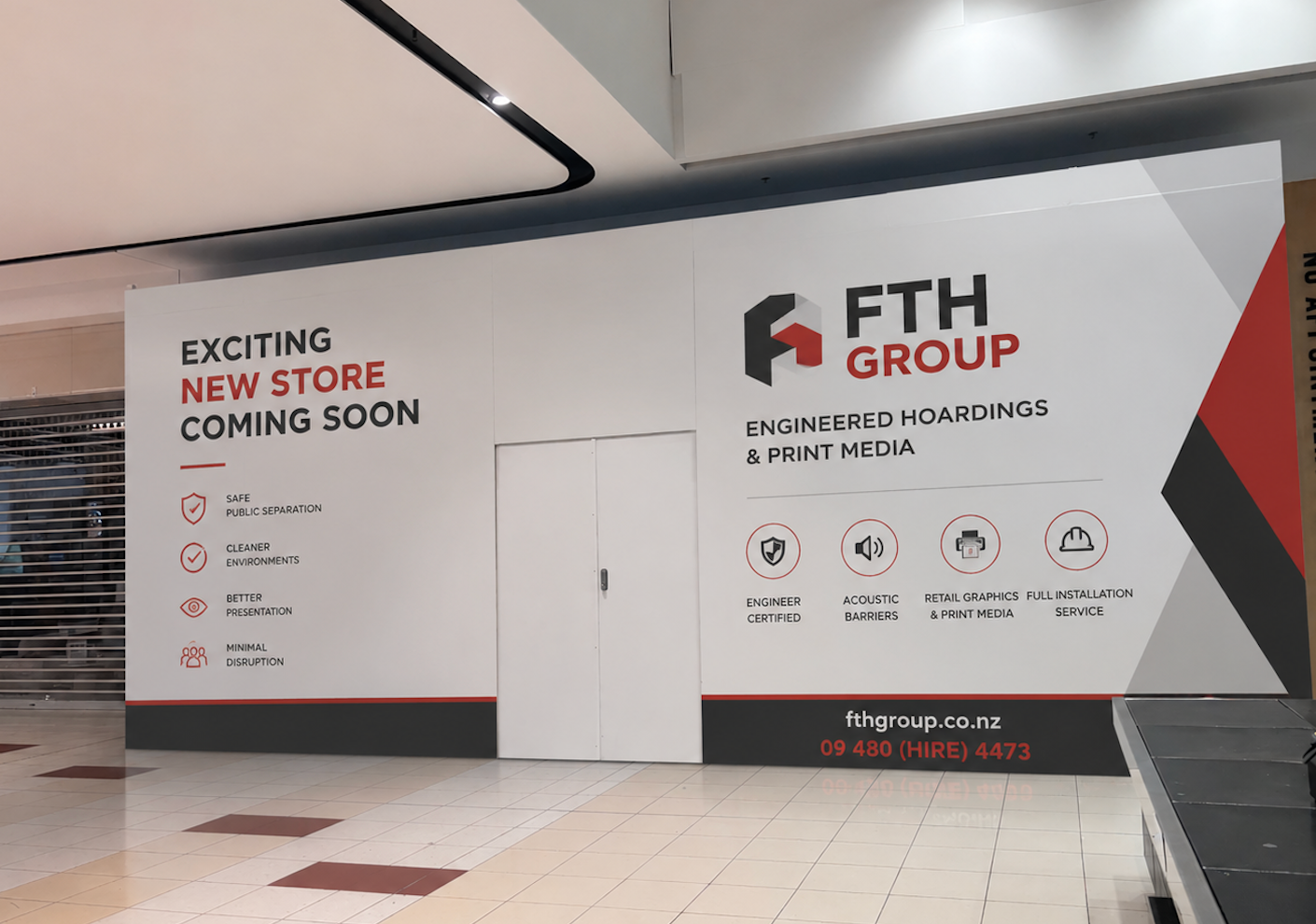
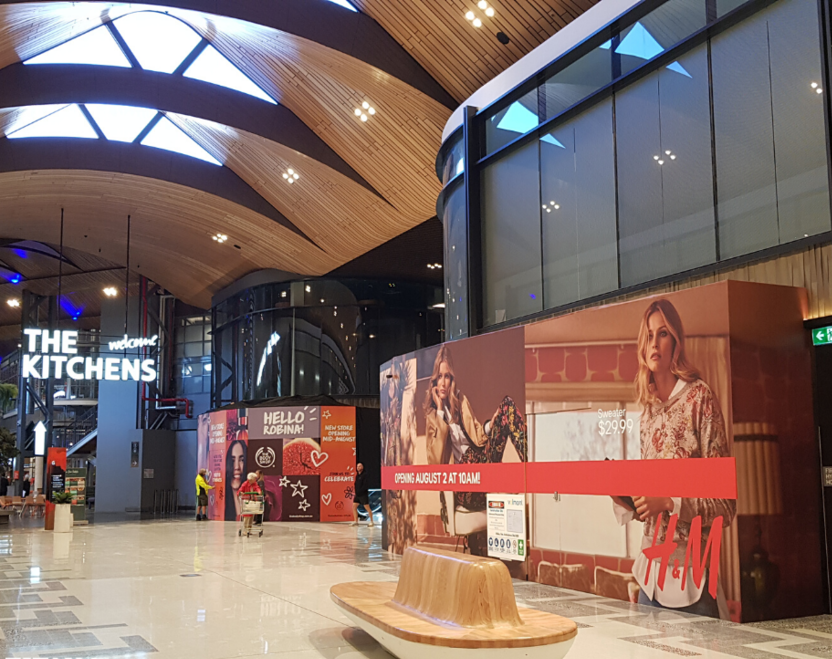
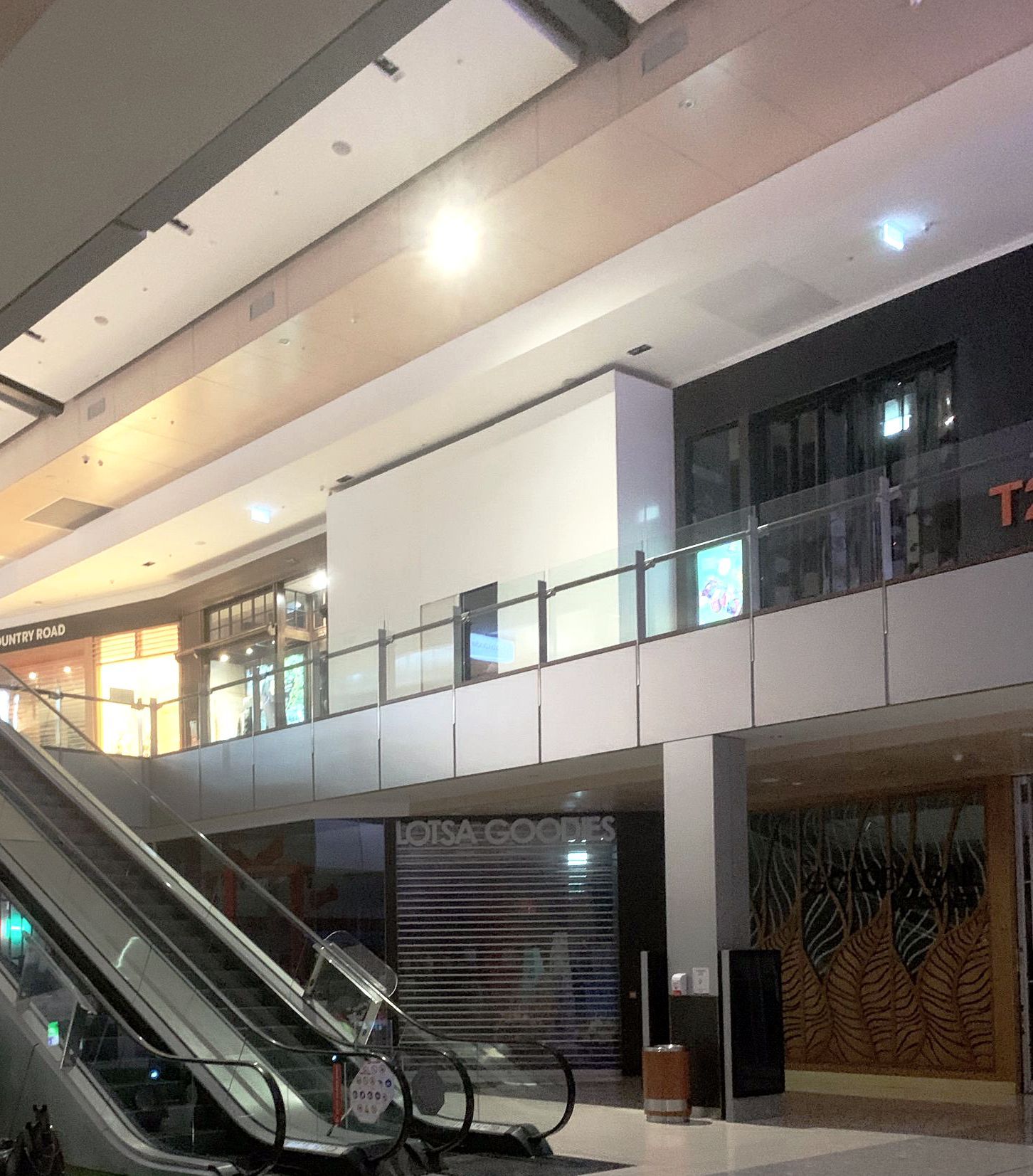
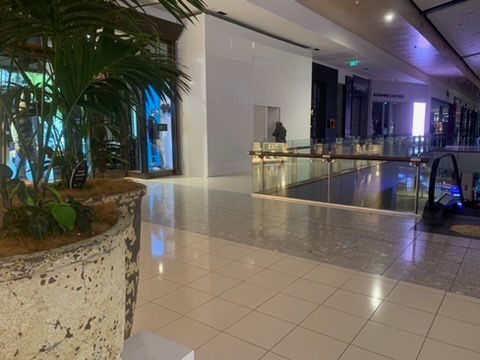
- Internal retail hoardings
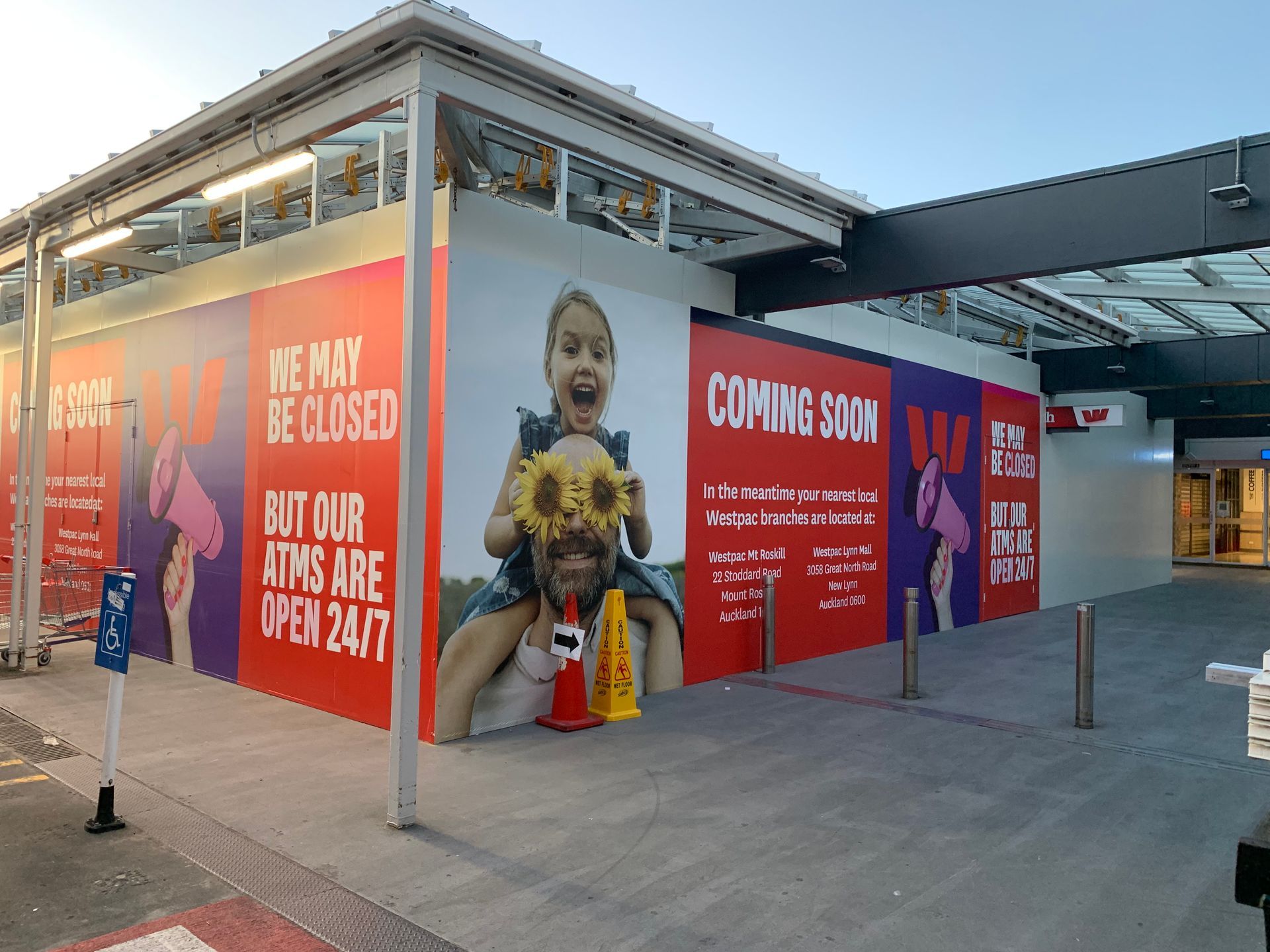
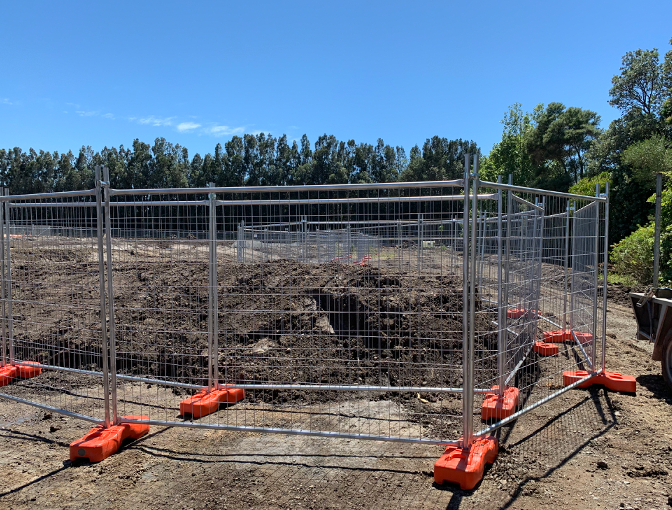
- External perimeter hoardings
- Temporary fencing and security screening
- Construction separation walls
- Shopping centre fit-out hoardings
- Public exclusion barriers
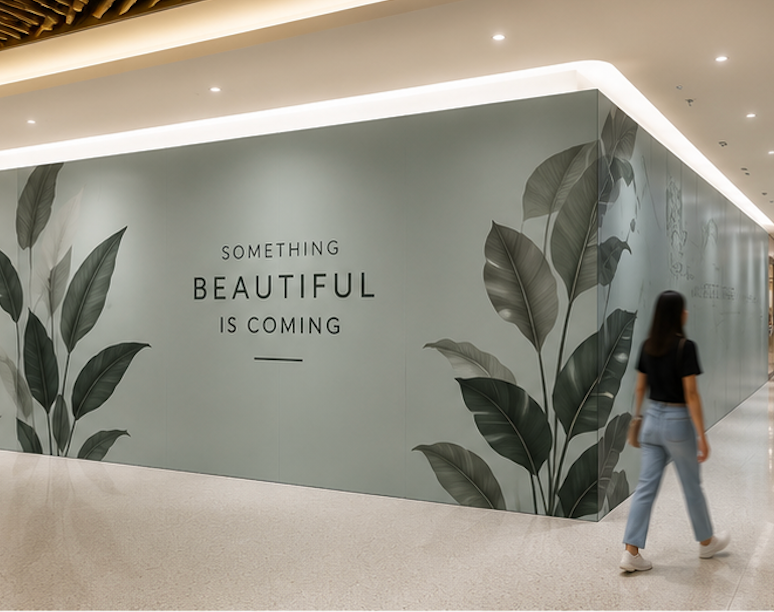
- Printed hoarding graphics and branded screening
The purpose is usually a combination of:
- Public safety
- Security
- Site presentation
- Noise reduction
- Dust separation
- Privacy
- Protection of unfinished work areas
In live retail and commercial environments, hoardings often become highly visible parts of the customer experience — which means safety, presentation and planning matter.
Why Getting Temporary Hoarding Wrong Can Become Expensive
Many temporary hoarding issues are not discovered at quotation stage.
They often appear later when:
- Engineering gets requested
- Site conditions change
- Wind exposure becomes a concern
- Public access requirements shift
- Graphics increase loading
- Property owners request additional information
- Contractors discover fixing limitations
This can result in:
- Delays to project programmes
- Rework costs
- Additional engineering review
- Safety concerns
- Disruption to tenants or customers
- Presentation issues in public-facing environments
In shopping centres and live retail environments, poor temporary works planning can become highly visible very quickly.
Temporary Hoarding NZ Decision Tree
The following questions can help identify what may need closer consideration.
1. Is The Hoarding Internal Or External?
This is often one of the first questions to ask.
Internal hoardings may operate in more controlled environments with reduced weather exposure.
External hoardings are often exposed to environmental conditions, including wind, weather, vehicle movement, and public interaction.
Depending on the environment, this may affect structural considerations and system selection.
2. Is It Public Facing?
Will members of the public walk near it?
Examples include:
- Shopping centres
- Footpaths
- Carparks
- Retail entrances
- Pedestrian accessways
Where the public interacts with a temporary structure, additional risk considerations may become relevant.
For example:
- Stability
- Climb risks
- Falling hazards
- Public impact resistance
- Visibility into unsafe work areas
Under the Health and Safety at Work Act 2015, PCBUs have duties to manage risk so far as reasonably practicable.
3. Is Wind Loading A Factor?
Wind loading can be an important consideration for some temporary structures.
Questions to ask include:
- Is the hoarding external?
- Is the Internal Hoarding subject to this?
- Is the location exposed?
- Is it elevated?
- Is it on a rooftop or carpark?
- Is there significant surface area?
Depending on project conditions, wind exposure may influence engineering or structural review requirements.
4. Is It Free-Standing Or Attached?
Some hoardings are:
Free-standing
while others are:
Attached to buildings or structures.
This distinction matters because fixing methodology, load transfer, and structural behaviour can differ depending on how the system is installed.
Questions worth asking:
- What supports the system?
- Is ballast required?
- What fixing method is proposed?
- Has the supporting structure been considered?
5. Is The Hoarding Over 2.5 Metres?
Height can become an important consideration.
While there is no one-size-fits-all answer, projects involving taller structures may warrant closer review depending on:
- Site conditions
- Public interface
- Wind loading
- Fixing methodology
- Structural design
- Environmental exposure
The higher the structure, the more important proper planning generally becomes.
6. Are Graphics Increasing Sail Area?
This is a commonly overlooked issue.
Printed graphics, banners, signage or solid panels may increase the effective surface area of a temporary structure.
In some situations, this may influence how environmental loading behaves.
Questions to ask:
- Is the hoarding wrapped?
- Are solid graphics installed?
- Are acoustic materials being added?
- Has loading been considered?
7. Does The Public Interface With The Structure?
Can people:
- Lean on it?
- Touch it?
- Queue beside it?
- Walk directly adjacent to it?
Live environments require practical thinking.
Shopping centres, retail fit-outs and commercial developments often involve high pedestrian movement, making stability and presentation important considerations.
8. Is There A Climb Or Fall Risk?
Could someone climb it?
Could someone gain access to a restricted area?
Could there be a fall hazard?
In some environments, temporary structures may need additional thought around:
- Height
- Anti-climb considerations
- Visibility
- Public access separation
Depending on the project, aspects of the New Zealand Building Code, including safety considerations, will become relevant.
9. Could Site-Specific Engineering Be Relevant?
Not every project is identical.
Yes on:
- Height
- Exposure
- Public interface
- Structural loading
- Wind conditions
- Site-specific risks
additional engineering review may sometimes be considered.
This is particularly relevant where temporary works interact with the public or where environmental exposure increases project complexity.
10. Could A Producer Statement Be Relevant?
Depending on the project and approval requirements, documentation such as:
PS1 (design)
or
PS4 (construction review) should be asked for on PS1
may sometimes be requested.
This often depends on:
- Property owner requirements
- Council processes
- Building Consent
- Project complexity
- Engineering scope
11. Could Council Or Consent Considerations Apply?
Depending on height, location, structure type, and project conditions, some projects may involve consent or exemption considerations.
This is not always straightforward.
Questions may include:
- Is it temporary?
- Does it Become a Building/Wall
- Is it attached?
- What height is involved?
- Is it public-facing?
- Does it create structural implications?
Early planning can often help avoid unnecessary delays later.
Common Temporary Hoarding Mistakes
Some of the more common issues seen on projects include:
❌ Treating all hoardings the same
❌ Using generic drawings only
❌ Ignoring wind exposure
❌ Overlooking graphics and additional loading
❌ Waiting too late to ask engineering questions
❌ Poor planning around public interaction
❌ Assuming temporary means “no rules”
Temporary structures still need practical risk assessment and planning.
When Should You Ask More Questions?
It may be worth seeking further guidance where projects involve:
- Public-facing environments
- Elevated areas
- Large solid surfaces
- Significant graphics
- Internal Locations
- External locations
- Increased height
- Live retail environments
- High pedestrian movement
- Over 2.4 Meters
- Building Consent
- Engineer Certification
- Resource Consent
Early conversations can often help avoid redesign, delays, and unexpected project costs later.
Frequently Asked Questions
Does every temporary hoarding need engineering?
Not necessarily. Requirements can vary depending on project conditions, location, loading, height, and public interface. Short answer maybe not if it’s under a height of 2.4
Does temporary mean no compliance obligations?
No. Temporary structures may still involve safety, structural and practical risk considerations.
Do graphics affect temporary hoardings?
In some situations, graphics or solid surfaces may increase loading considerations.
Are internal and external hoardings treated the same?
Not always. Environmental exposure and public interface can create different project considerations.
Final Thoughts
Temporary hoarding in New Zealand is rarely a one-size-fits-all discussion.
What works on one project may will not suit another.
The right approach often depends on practical site conditions, risk exposure, public interface, and the environment the structure is operating within.
Speaking with the right provider early in the process can help reduce unnecessary delays, rework, and compliance questions later in the project.
Why FTH Group Takes A Different Approach To Temporary Hoardings
Compliance should never be guesswork.
Too often, temporary hoardings are treated as “just a fence” or installed using generic drawings without properly considering the actual project environment.
The reality is:
no two sites are the same.
Height, length, wind loading, impact loading, public interface, fixing methodology, environmental exposure and site conditions can all influence what may need to be considered on a project.
That is why FTH Group provides engineer-certified, site-specific hoarding solutions designed around the actual location and intended use — not assumptions, recycled drawings or one-size-fits-all systems.
In live environments such as shopping centres, commercial buildings and public-facing projects, getting temporary works wrong can lead to redesign costs, delays, presentation issues, safety concerns and unnecessary project risk.
The right hoarding solution should be based on facts, engineering and site conditions — not guesswork.